Animal

In this episode of High Theory, Mackenzie Cooley talks about animals. The animal lies at the center of science and the human, from imperial conquest and Enlightenment thought to the creatures on our dinner plates and sitting beside us at the table. The practices of animal breeding and the politics of making life are, in Mackenzie’s account, key to understanding the history of race, as a concept that emerged in the Early Modern World.

For more animal encounters, check out her book The Perfection of Nature: Animals, Breeding, and Race in the Renaissance (Chicago UP, 2022). In it, Italian horses and Mexican dogs provide examples of controlled breeding before eugenics, help us understand how human difference was understood in the colonial encounter, and illuminate undertheorized notions of generation and its discontents in the more-than-human world. 

Tag dog and Bartolomé the cat sometimes participate in the making of High Theory, but the podcast is not necessarily pitched to non-human ears. If you want radio for animals, listen to Bad Animals on WFMU. 

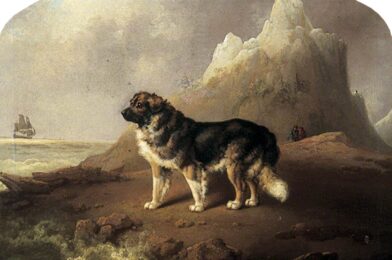
Mackenzie Cooley is Assistant Professor of History, Director of Latin American Studies at Hamilton College. She is an intellectual historian who studies the uses, abuses, and understandings of the natural world in early modern science and medicine. And she has two Newfoundland dogs. 

The image accompanying this episode is a painting of a Newfoundland Dog by Charles Henry Schwanfelder (1812), from the collection of Temple Newsam House, Leeds Museums and Galleries. 

Tagged : / / / / /

Nature-Study

In this episode, John Linstrom tells us about Nature-Study, an educational movement that began in the rural classrooms of American Progressive Era. It takes students and learners of all kinds out of the classroom, away from the textbook, and into the world, to observe and learn. It offers us a mode of attunement to the world that we might use to heal the divide between rural and urban, and kindle the kind of social change we need to get the world off fossil fuels.

Our conversation is centered around the new scholarly edition John edited of Liberty Hyde Bailey’s The Nature-Study Idea (Cornell University Press, 2023), which just came out. It’s the first book in the new The Liberty Hyde Bailey Library, a series for Cornell University Press reintroducing the ecological and critical-agrarian writings of L. H. Bailey (1858-1954). John was one of our first guests on High Theory back in 2020 – so if you want to listen back, you can check out the episode on Ecosphere. John told me when were were preparing to record that there was some debate about the dash in “Nature-Study” back in the day, but that he was on the side of the dashers, because the women teachers who led the movement favored the dash.

John is a Mellon Foundation Postdoctoral Fellow in Climate and Inequality at the Climate Museum in NYC. He is also the author of a book of poems called To Leave for Our Own Country coming out with Black Lawrence Press in April 2024. He believes in poetry’s power to foster communities for change, human and more-than-human stories and visions of climate justice He received his PhD in Literature from New York University and his MFA in Creative Writing and Environment from Iowa State University. John, Kim, and Saronik spent a lot of time together as grad students at 244 Greene St. in NYC. John and Kim used to run a working group on agriculture and literature, called Farm to Text. John lives in Queens, where gleans deep joy from holding his baby daughter, singing choral music, and eating large quantities of pesto.

The image for this episode was made by Saronik Bosu, especially for his friend John, in 2023.

Tagged : / / / / / /

Sisterhood

In this episode of High Theory, Katherine Turk tells us about Sisterhood, a familial metaphor used to evoke gendered solidarity in women’s movement of the mid-sixties and seventies, and a utopian ideal of equality within the human family. It’s a universalizing but aspirational concept that helped feminists build a political coalition. 

Our conversation is based upon Katherine’s new book about the National Organization of Women: The Women of NOW: How Feminists Built an Organization That Transformed America (MacMillan, 2023). This mainstream feminist organization is often neglected in histories of the period, dismissed as a liberal organization dedicated to incremental change. But NOW was an expansive organization that changed over time, shifted the conversation and legal structures in the US, and left an important historical record that we can learn from in social justice work today. 

Katherine Turk is an associate professor of History and an adjunct associate professor of Women’s and Gender Studies at UNC Chapel Hill. Her research and teaching focus on women, sex, gender, law, labor, and modern social movements. Her first book Equality on Trial: Gender and Rights in the Modern American Workplace (Politics and Culture in Modern America Series, University of Pennsylvania Press, 2016) studies the history of Title VII of the 1964 US Civil Rights Act, which outlawed workplace discrimination on the basis of such personal attributes as sex, race, and religion. 

The image for this week was made by Saronik Bosu. It shows Aileen Hernandez, Mary Jean Collins, and Patricia Hill Burnett, leaders of NOW who are the primary subjects of Katherine’s book.

Tagged : / / / / /

Plantationocene

In this episode of High Theory, Neil Safier talks with us about the Plantationocene, a geological epoch that traces the effects of climate change to the historical systems of human and nonhuman environmental exploitation known as plantation agriculture. It is another name for the world we currently inhabit. 

In the episode, Neil describes how Donna Harraway and Anna Tsing invented the term Plantationocene in response to another recent term Anthropocene. Sources to check out include Donna Haraway’s essay, “Anthropocene, Capitalocene, Plantationcene, Chthulucene: Making Kin” Environmental Humanities 6 no. 1 (2015): 159-165. doi: 10.1215/22011919-3615934, and Paul Crutzen, “The ‘Anthropocene’” Earth Systems Science in the Anthropocene ed. Eckhart Ehlers and Thomas Krafft (Springer, 2006) pp. 13-18. He references B.F. Skinner’s novel Walden Two (MacMillan, 1962) at the end of our conversation. 

Neil Safier is Associate Professor in the Department of History at Brown University where he currently serves as Director of the Center for Latin American and Caribbean Studies of the Watson Institute for International Affairs. He studies the history of science, agriculture, and other forms of knowledge-making in the late-eighteenth-century Atlantic world, focusing on the plantation cultures of the Caribbean and Brazil. He was recently the director of the John Carter Brown Library, at Brown University, and many years ago, when he was more optimistic about the current global epoch, he managed grants for the Sierra Club Foundation in San Francisco, California. He is the author of Measuring the New World: Enlightenment Science and South America (U Chicago, 2008) and is cooking up two new projects, on the historical connections between natural science and plantation agriculture in the Amazon River basin and the global history of collecting. 

The image for this week comes from Neil’s research on the history of plantation agriculture. This drawing of a plantation from Hispaniola (Saint-Domingue) was reproduced in José Mariano da Conceição Velozo’s Fazendeiro do Brazil Tome III Part II (Lisbon, 1799), in the volume dedicated to coffee production.

Tagged : / / / / /

Global Asia

Cheryl Narumi Naruse talks about the transformation of Singapore over the past decades into a site of postcolonial promise, with economic prosperity and cultural soft power. She discusses a range of texts ranging from official state documents to the immensely popular book and movie adaptation of Crazy Rich Asians, which bear witness to and contribute to this change.

Cheryl Narumi Naruse is Assistant Professor of English and the Andrew W. Mellon Assistant Professor of the Humanities at Tulane University. Her research and teaching interests include contemporary Anglophone literatures and cultures (particularly those from Southeast Asia and the Pacific Islands), diasporic Asian and Asian American literature, postcolonial theory, cultures of capitalism, and genre studies. Her first book, Becoming Global Asia: Contemporary Genres of Postcolonial Capitalism in Singapore is forthcoming from University of California Press in 2023. She is also working on a second monograph which explores the illegibility of Singapore/Malaysia—as the comparatively “cold” Southeast nations in the context of the Vietnam War—in Asian American and postcolonial studies. 

Image: © 2023 Saronik Bosu

Tagged : / / / / / / / / / / / / / / / /

Computer Graphics

In this episode of High Theory, Bernard Dionysius Geoghegan talks with us about computer graphics. Emerging from tools for sailing and warmaking, like sea charts and radar, modern computer graphics are technologies of mapping and managing risk. They seem intent on absorbing the human sensorium into the machine.  

In the episode Bernard refers to computer graphics as “techniques of addressing,” a term he attributes to Ranjodh Singh Dhaliwal.  He also uses the term “operational images” which comes from the work of Harun Farocki, and talks about SAGE, the US Government’s Cold War era Semi-Automatic Ground Environment Air Defense System.  Bernard references Paul Edward’s book A Vast Machine: Computer Models, Climate Data, and the Politics of Global Warming (MIT Press, 2013). He also mentions the German scholar Christoph Borbach who has written on auditory computer interfaces, and American disability studies scholar Mara Mills, who has written on the Deaf history of computing.  He was kind enough to give us an extensive bibliography on this topic, which is posted below. 

Bernard Dionysius Geoghegan is a reader in the History and Theory of Digital Media at King’s College London.  He has a brand new book out on the cybernetic history of French theory, called Code: From Information Theory to French Theory (Duke UP, 2023). Kim met him when he came to give a talk at the Stanford Humanities Center in January 2023.  He wore denim and had a slightly manic affect. People came all the way from Berkeley to hear what he had to say, which is quite impressive in the Bay Area.  

Places I’ve developed these topics in print:

Galloway, Alexander, and Bernard Dionysius Geoghegan. “Shaky Distinctions: A Dialogue on the Digital and the Analog – Journal #121 October 2021 – e-Flux.” E-Flux, no. 121 (October 2021). https://www.e-flux.com/journal/121/423015/shaky-distinctions-a-dialogue-on-the-digital-and-the-analog/.

Geoghegan, Bernard Dionysius. “An Ecology of Operations: Vigilance, Radar, and the Birth of the Computer Screen.” Representations 147, no. 1 (August 2019): 59–95. https://doi.org/10.1525/rep.2019.147.1.59.

———. “The Bitmap Is the Territory: How Digital Formats Render Global Positions.” MLN 136, no. 5 (2021): 1093–1113. https://doi.org/10.1353/mln.2021.0081.

A video lecture talking about these topics:

My lecture starting around 3 hours, 7 min. mark on this YouTube Video: “Screening the Environment: From Rough Waters to Computable Grids.” Vivre par(mi) les écrans : passé et avenir, Université Jean Moulin Lyon 3, April 2022.

Scholars whose works have inspired my remarks and research:

Bredekamp, Horst, Vera Dünkel, and Birgit Schneider, eds. The Technical Image. Chicago: University of Chicago Press, 2015. A great collection of essays in the spirit I try to follow in my own work.

Cardoso-Llach, Daniel. “Architecture and the Structured Image: Software Simulations as Infrastructures for Building Production.” In The Active Image: Architecture and Engineering in the Age of Modeling, edited by Sabine Ammon and Remel Capdevila-Werning, 23–52. Cham: Springer, 2017.

Denson, Shane. Discorrelated Images. Durham: Duke University Press, 2021.

Dhaliwal, Ranjodh Singh. “On Addressability, or What Even Is Computing.” Critical Inquiry 49, no. 1 (Autumn 2022): 1–27.  https://www.journals.uchicago.edu/doi/abs/10.1086/721167

Farocki, Harun. “Phantom Images.” Public, no. 29 (2004): 13–22. Where he briefly discusses the term operational images to which myself and so many others are indebted.

Gaboury, Jacob. Image Objects: An Archaeology of Computer Graphics. Cambridge (MA): MIT Press, 2021.

Hoelzl, Ingrid, and Rémi Marie. “Google Street View: Navigating the Operative Image.” Visual Studies 29, no. 3 (2014): 261–71. https://doi.org/10.1080/1472586X.2014.941559. 

Parikka, Jussi. “Operational Images: Between Light and Data.” E-Flux, no. 133 (February 2023). https://www.e-flux.com/journal/133/515812/operational-images-between-light-and-data/.

Schneider, Birgit. Textiles Prozessieren. Zurich: Diaphanes, 2007. A great early study of the relation of computation to graphical—as well as visual, practical, labor, and craft—histories.

Vardouli, Theodora. “Skeletons, Shapes, and the Shift from Surface to Structure in Architectural Geometry.” Nexus Network Journal, 2020. https://doi.org/10.1007/s00004-020-00478-0. (One of many inspiring texts and projects Theodora’s put into the world, on compters, graphics, and space.)

This week’s image is a radar loop of the December 16 2007 Eastern North America winter storm, found on Wikimedia Commons. The loop runs from Saturday Morning at 7 AM (Dec 15) to Sunday Night at 7 PM (Dec 16). The image is in the public domain because it was made by someone who works for the National Weather Service in Burlington, Vermont. The rate of change of the GIF was slowed down to avoid triggering folks with photosensitive epilepsy. 

Tagged : / / / / /

Reading

Reading

Swati Moitra explains how reading can be a subversive and even revolutionary act in certain socio-historical contexts. She draws especially from her own work in the history of women’s reading practices in nineteenth and early twentieth century India, in particular the region of Bengal. She talks about the dual indices of literacy and pleasure in her work, and its affiliations to fields like book history and print cultural studies.

Swati Moitra (M.Phil., Ph.D.) is Assistant Professor at the Department of English at Gurudas College, University of Calcutta. Her areas of interest include book history and histories of readership. She is the recipient of the SHARP Research Development Grant for BIPOC Scholars 2022.

Image: © 2023 Saronik Bosu


Tagged : / / / / / / / / / / /

Civil Disobedience

Eraldo Souza dos Santos talks about the invention of civil disobedience as a form of political action around the world, and the need for its redefinition to describe activism present and future. In the episode, he references John Rawls’s classic definition from A Theory of Justice (Harvard UP, 1971) and Erin Pineda’s new book, Seeing Like an Activist: Civil Disobedience and the Civil Rights Movement (Oxford UP, 2021).

Eraldo Souza dos Santos is a philosopher and historian of political thought whose research explores how political concepts have come to shape political discourse and political practice, and how political actors have come to contest the meaning of these concepts in turn. In his current project, he traces the global history of the idea of civil disobedience. He is currently a Ph.D. candidate in Philosophy at Panthéon-Sorbonne University. He has been the recipient of grants and fellowships from the Académie française, the Maison française d’Oxford, the Leuven Institute for Advanced Studies, the Munich Centre for Global History, the Friedrich Nietzsche College of the Klassik Stiftung Weimar, the French-Dutch Network for Higher Education and Research, and the Coordination for the Improvement of Higher Education Personnel, among others.

Image: Bas-Relief of the Salt March led by M.K. Gandhi in March-April 1930, photograph by Nevil Zaveri, available here under Creative Commons.

Tagged : / / / / / / /

Presentism

Anna Kornbluh talks about presentism, the anachronistic historical practice of studying the past with contemporary frames of understanding. While some orthodoxies might consider it to be tantamount to historical heresy, presentism can be a powerful tool in building histories of anti-establishment struggles, such as women’s and workers’ rights movements. The conversation also focuses on the work of the V21 Collective, a research collective that Anna organizes, which applies presentist methods to Victorianist scholarship.

Anna Kornbluh is Professor of English and Director of Graduate Studies at University of Illinois, Chicago. Her research and teaching focus on the novel, film, and critical theory, especially marxism, psychoanalysis, structuralism, and formalism. She is the author of The Order of Forms: Realism, Formalism, and Social Space (University of Chicago 2019),  Marxist Film Theory and Fight Club (Bloomsbury “Film Theory in Practice” series, 2019), and Realizing Capital: Financial and Psychic Economies in Victorian Form (Fordham UP 2014).  Her current research concerns impersonality, objectivity, mediation, and abstraction as residual faculties of the literary in privatized urgent times.  She is the founding facilitator of two scholarly cooperatives: V21 Collective and InterCcECT.

Image: © 2022 Saronik Bosu

Music used in promotional material: ‘Past has not Passed’ by James Blackshaw

Tagged : / / / / / / / / / /

Monuments

Erin L. Thompson talks about monuments, and their role in American public life. Public art intervenes in directly in politics, shaping social behavior in the present. Monuments, in her account, are a bid for immortality that says “this is how things are” but often means “this is how things should be.”

In the episode she talks about The Houston Museum of African American Culture. They are engaged in a super exciting project reinterpreting the cultural memory of the US Civil War, as the first Black cultural institution that has re-housed a Confederate monument.

If you’re keen on the history and politics of monuments, check out her brand new book: Smashing Statues: The Rise and Fall of America’s Public Monuments. It’s coming out from Norton this Tuesday (Feb 8)! You learn more about the book, and her upcoming talks on her website: artcrimeprof.com

Erin L. Thompson is an associate professor of Art Crime at the John Jay College of Criminal Justice of the City University of New York. Her first book Possession (Yale UP, 2016) studied the history of theft at the heart of private art collections from the Ancient World to the present.

Image: Statue of a man on a horse, part of the the Ulysses S. Grant Memorial at the US Capital, described in this article from the Architect of the Capital, US government website.

Music used in promotional material: ‘Morrisson’s jig – Leslie’s march’ by Aislinn

Tagged : / / / / / / / / / / / / / / / / /
css.php