Inhuman

In this episode of High Theory, Rasheed Tazudeen tells us about the inhuman. The inhuman offers a way of moving beyond the legacies of humanism and across categories and scales of being. Thinking with the inhuman world, from spools of thread to microplastics, helps us try and think otherwise about the complex assemblages that shape our lives. 

If you want to learn more, check out Rasheed’s new book, Modernism’s Inhuman Worlds (Cornell UP, 2024). The book explores the centrality of ecological precarity, species indeterminacy, planetary change, and the specter of extinction to modernist and contemporary metamodernist literatures. Modernist ecologies emerge in response to the enigma of how to imagine inhuman being—including soils, forests, oceans, and the earth itself—through languages and epistemologies that have only ever been humanist. Rasheed asks how (meta)modernist aesthetics might help us to imagine (with) inhuman worlds, including the worlds still to be made on the other side of mass extinction. 

Rasheed Tazudeen is a lecturer in English at Yale University. His work is focused broadly on the intersections between ecology, race, and sound in 19th- and 20th-century literature and music. He is currently at work on a second project tentatively titled The Musicked Earth: Towards a Decolonial Sound Ecology, focused on the resonances between Black/Afro-Caribbean and Indigenous theories of sound, music, festival, and ecology through the work of Sylvia Wynter, Édouard Glissant, Leanne Simpson, and Alice Coltrane. 

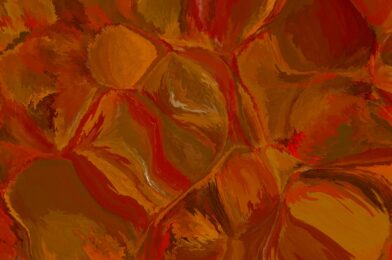
This week’s image was made by Saronik Bosu in 2024. It represents a humanoid creature in fetal position, merging with the inhuman world.
Tagged : / / /

Animal

In this episode of High Theory, Mackenzie Cooley talks about animals. The animal lies at the center of science and the human, from imperial conquest and Enlightenment thought to the creatures on our dinner plates and sitting beside us at the table. The practices of animal breeding and the politics of making life are, in Mackenzie’s account, key to understanding the history of race, as a concept that emerged in the Early Modern World.

For more animal encounters, check out her book The Perfection of Nature: Animals, Breeding, and Race in the Renaissance (Chicago UP, 2022). In it, Italian horses and Mexican dogs provide examples of controlled breeding before eugenics, help us understand how human difference was understood in the colonial encounter, and illuminate undertheorized notions of generation and its discontents in the more-than-human world. 

Tag dog and Bartolomé the cat sometimes participate in the making of High Theory, but the podcast is not necessarily pitched to non-human ears. If you want radio for animals, listen to Bad Animals on WFMU. 

Mackenzie Cooley is Assistant Professor of History, Director of Latin American Studies at Hamilton College. She is an intellectual historian who studies the uses, abuses, and understandings of the natural world in early modern science and medicine. And she has two Newfoundland dogs. 

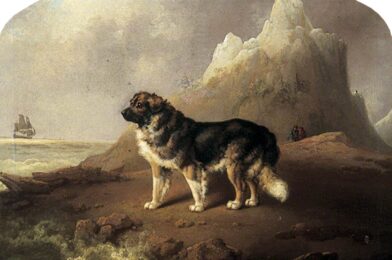
The image accompanying this episode is a painting of a Newfoundland Dog by Charles Henry Schwanfelder (1812), from the collection of Temple Newsam House, Leeds Museums and Galleries. 

Tagged : / / / / /

Nature-Study

In this episode, John Linstrom tells us about Nature-Study, an educational movement that began in the rural classrooms of American Progressive Era. It takes students and learners of all kinds out of the classroom, away from the textbook, and into the world, to observe and learn. It offers us a mode of attunement to the world that we might use to heal the divide between rural and urban, and kindle the kind of social change we need to get the world off fossil fuels.

Our conversation is centered around the new scholarly edition John edited of Liberty Hyde Bailey’s The Nature-Study Idea (Cornell University Press, 2023), which just came out. It’s the first book in the new The Liberty Hyde Bailey Library, a series for Cornell University Press reintroducing the ecological and critical-agrarian writings of L. H. Bailey (1858-1954). John was one of our first guests on High Theory back in 2020 – so if you want to listen back, you can check out the episode on Ecosphere. John told me when were were preparing to record that there was some debate about the dash in “Nature-Study” back in the day, but that he was on the side of the dashers, because the women teachers who led the movement favored the dash.

John is a Mellon Foundation Postdoctoral Fellow in Climate and Inequality at the Climate Museum in NYC. He is also the author of a book of poems called To Leave for Our Own Country coming out with Black Lawrence Press in April 2024. He believes in poetry’s power to foster communities for change, human and more-than-human stories and visions of climate justice He received his PhD in Literature from New York University and his MFA in Creative Writing and Environment from Iowa State University. John, Kim, and Saronik spent a lot of time together as grad students at 244 Greene St. in NYC. John and Kim used to run a working group on agriculture and literature, called Farm to Text. John lives in Queens, where gleans deep joy from holding his baby daughter, singing choral music, and eating large quantities of pesto.

The image for this episode was made by Saronik Bosu, especially for his friend John, in 2023.

Tagged : / / / / / /

Plantationocene

In this episode of High Theory, Neil Safier talks with us about the Plantationocene, a geological epoch that traces the effects of climate change to the historical systems of human and nonhuman environmental exploitation known as plantation agriculture. It is another name for the world we currently inhabit. 

In the episode, Neil describes how Donna Harraway and Anna Tsing invented the term Plantationocene in response to another recent term Anthropocene. Sources to check out include Donna Haraway’s essay, “Anthropocene, Capitalocene, Plantationcene, Chthulucene: Making Kin” Environmental Humanities 6 no. 1 (2015): 159-165. doi: 10.1215/22011919-3615934, and Paul Crutzen, “The ‘Anthropocene’” Earth Systems Science in the Anthropocene ed. Eckhart Ehlers and Thomas Krafft (Springer, 2006) pp. 13-18. He references B.F. Skinner’s novel Walden Two (MacMillan, 1962) at the end of our conversation. 

Neil Safier is Associate Professor in the Department of History at Brown University where he currently serves as Director of the Center for Latin American and Caribbean Studies of the Watson Institute for International Affairs. He studies the history of science, agriculture, and other forms of knowledge-making in the late-eighteenth-century Atlantic world, focusing on the plantation cultures of the Caribbean and Brazil. He was recently the director of the John Carter Brown Library, at Brown University, and many years ago, when he was more optimistic about the current global epoch, he managed grants for the Sierra Club Foundation in San Francisco, California. He is the author of Measuring the New World: Enlightenment Science and South America (U Chicago, 2008) and is cooking up two new projects, on the historical connections between natural science and plantation agriculture in the Amazon River basin and the global history of collecting. 

The image for this week comes from Neil’s research on the history of plantation agriculture. This drawing of a plantation from Hispaniola (Saint-Domingue) was reproduced in José Mariano da Conceição Velozo’s Fazendeiro do Brazil Tome III Part II (Lisbon, 1799), in the volume dedicated to coffee production.

Tagged : / / / / /

The Environmental Unconscious

Steven Swarbrick talks about poetic engagement with nature in the work of early modern poets ​​Edmund Spenser, Walter Ralegh, Andrew Marvell, and John Milton. Here language is influenced not by the manifest and the conscious, but the unconscious or void, as understood in Freudian and Lacanian psychoanalytic theory. This work is the basis for his hope for a reorganization of thought in contemporary ecocriticism around a politics of degrowth instead of additive policies that serve to greenwash capitalist economies.

Steven Swarbrick is an assistant professor of English at Baruch College, City University of New York. His research interests include early modern literature, contemporary continental philosophy, psychoanalysis, the environmental humanities, and sexuality and film studies. He is the author of The Environmental Unconscious: Ecological Poetics from Spenser to Milton (University of Minnesota Press, 2023) and co-author, with Jean-Thomas Tremblay, of Negative Life: The Cinema of Extinction (Northwestern University Press, under contract). He is currently working on two books: Unknowing Sex: Shakespeare against the Historicists and Destituent Ecology: Libidinal Politics for the Environmental Left.

Image: © 2023 Saronik Bosu

Tagged : / / / / / / / /

Off-Shore Aesthetics

Sritama Chatterjee talks about a model of literary criticism that she developed in the process of writing her new essay on shipbreaking in Bangladesh. It is a form of materialist understanding for texts, places, and geographies together, taking into account particular signifiers of a place and looking at correspondent literary responses. 

Sritama is a literary and cultural theorist of the Indian Ocean World, in the Literature program at the Dietrich School of Arts and sciences, University of Pittsburgh. Her dissertation project titled, “Ordinary Environments and Aesthetics in Contemporary Indian Ocean Archipelagic Writing” has been awarded an Andrew Mellon Pre-Doctoral Fellowship from her graduate school for outstanding research and scholarly excellence. Her work on the Indian Ocean archipelagos also takes the shape of a collaborative public-facing, community project Delta Lives, which platforms communities in Sundarbans telling their stories. As part of her commitment to rethinking environmental humanities pedagogy, she has edited a cluster on “Water Pedagogies: From the Academy and Beyond” published by NICHE Canada which brings together a set of eleven articles from scholars and activists reflecting on water pedagogy. 

Image: © 2022 Saronik Bosu

Tagged : / / / / / / / / /

Care Ethics

Merel Visse and Inge van Nistelrooij talk with Kim about Care Ethics.

Over the course of the episode, we discuss works by many care ethicists and other philosophically inclined thinkers. Prominent among these is Joan Tronto, whose book Caring Democracy: Markets, Equality, and Justice (NYU Press, 2013) offers a political approach to the practice of care. Also discussed are Carol Gilligan’s In a Different Voice: Psychological Theory and Women’s Development (Harvard UP, 1982; useful excerpt available here) and Francois Jullien’s The Silent Transformations (trans. Krysztof Fijalkowski and Michael Richardson, Seagull Books / Chicago UP, 2011).

Several of Merel and Inge’s publications are discussed in the episode as well. You can read their co-authored article, “Me? The invisible call of responsibility and its promise for care ethics: a phenomenological view” in Medicine, Health Care and Philosophy (2019) 22: 275–285. Full lists of publications are available for Inge here and Merel here.

Both our guests are members of the Care Ethics Group at the University of Humanistic Studies in Utrecht, the Netherlands. Inge van Nistelrooij is an Associate Professor of Care Ethics at the University of Humanistic Studies and an endowed professor of Dialogical Self Theory (DST) at Radboud University in Nijmegen, the Netherlands. Merel Visse is the Director of the Medical and Health Humanities Program at Drew University in Madison, New Jersey and an associate professor in Care Ethics at the University of Humanistic Studies.

This week’s image is an undated painting titled “Resting” by Amrita Sher-Gil (1913-1941).

Music used in promotional material: ‘Peace of the Night’ by Crowander

Tagged : / / / / /

Modernist Mushrooms

Shalini Sengupta thinks together ‘the mycological turn’ in the humanities and the narrative and aesthetic work that mushrooms do in some modernist literature. She draws from Anna Tsing’s The Mushroom at the End of the World and the research of Sam Solomon and Natalia Cecire. Modernist mushrooms, if they are a thing, exist in the writings of Alfred Kreymborg, Djuna Barnes, and Sylvia Plath, and the photography of Alfred Stieglitz.

Shalini is a final year PhD student at the University of Sussex, UK. Her thesis explores the concept of modernist difficulty in British and diasporic poetry through the lens of intersectionality. Her academic writing have appeared/are forthcoming in Modernism/modernity Print Plus, Contemporary Women’s Writing, and the Journal of British and Irish Innovative Poetry. In 2021, she was selected as a Ledbury Emerging Critic.

Image Art by Saronik Bosu

Music used in promotional material: ‘How Many’ by Windmill

Tagged : / / / / /

Recall This Book Crossover

This is our first crossover episode! Saronik and Kim talk to John Plotz from the wonderful Recall This Book podcast.

Our conversation is rather wide ranging, but we focus on podcasting and the pastoral. Take a look at their page for show notes and transcripts.

Some of the books we discuss include Hind Swaraj or Indian Home Rule, by M.K. Gandhi; Herland, by Charlotte Perkins Gilman; Angel Island by Inez Haynes Gillmore. Our recallable books are Mark Matthew’s Droppers, John Ruskin’s Unto This Last; and Thomas Hardy’s Return of the Native.

Recall this Book is hosted by John Plotz and Elizabeth Ferry. Elizabeth Ferry (who wasn’t able to join us for this crossover episode) is a professor of Anthropology at Brandeis University. John Plotz is a professor of English at Brandeis and a proficient podcaster. He’s just launched a new podcast called Novel Dialogue with Aarthi Vadde at Duke University. Check it out!

This week’s image is the Recall This Book podcast logo.

Tagged : / / / / / / / /

Hurricanes

Kim talks with Sonya Posmentier about hurricanes.

Sonya writes about hurricanes and diaspora in her book, Cultivation and Catastrophe: The Lyric Ecology of Modern Black Literature, Johns Hopkins University Press, 2017.

In the episode she references Kamau Brathwaite’s essay “The History of the Voice” and Rob Nixon’s book Slow Violence, Harvard University Press, 2011.

She also talks about a genre of Jamaican dancehall music that grew in the wake of Hurricane Gilbert in 1988. To hear some of that music and learn more about the musical resonances of hurricanes, you can read her “Hurricane Season Playlist” on the Johns Hopkins University Press blog.

Sonya teaches African American literature in the English Department at New York University (where she is an excellent dissertation advisor for literary scholars and future podcasters).

This week’s image of a spiral evoking hurricane wind patterns was borrowed from Wikimedia Commons. Creative commons license, CC By Share Alike.

Tagged : / / / / / / / /
css.php