Alcohol

In this episode of High Theory, Nina Studer tells us about alcohol. The restrictions and prohibitions, medical and moral discourses surrounding alcohol reveal a great deal about a given society in a particular historical moment. Nina uses alcohol as a lens to analyze the history of French colonization in North Africa. Who consumed alcohol, in what places, how much, and what kinds, what was viewed as healthy and what was viewed as dangerous, even criminal, can help us approach larger questions of gender, class, and nation. 

If you want to learn more, check out her new book, Hour of Absinthe: A Cultural History of France’s Most Notorious Drink (McGill-Queens University Press, 2024). The book explores how the mythologizing of one distilled alcohol led to the creation and fabrication of a vast modern folklore. Mystique and moralizing both arose from the spirit’s relationship with empire. Some claim that French soldiers were given daily absinthe rations during France’s military conquest of Algeria to protect them against heat, diseases, and contaminated water. In fact, the overenthusiastic adoption of the drink by these soldiers, and subsequently by French settlers, was perceived as a threat to France’s colonial ambitions – an anxiety that migrated into French medicine. At the height of its popularity in the late nineteenth century, absinthe reigned in the bars, cafés, and restaurants of France and its colonial empire. Yet by the time it was banned in 1915, the famous green fairy had become the green peril, feared for its connection with declining birth rates and its apparent capacity to induce degeneration, madness, and murderous rage in its consumers.

Dr. Nina Studer is a historian working on the 19th and 20th century history of French colonies in North Africa and the Middle East. Her work focuses on the history of drinks, in particular tea, coffee, Fanta/Coca-Cola, Orangina, wine and absinthe. Her doctorate, published as The Hidden Patients: North African Women in French Colonial Psychiatry (Böhlau, 2015) is available via Open Access. Currently she works as an associate researcher at the Institut Éthique Histoire Humanités at the University of Geneva, part of Dr. Francesca Arena’s team looking into the medical history of wet dreams between the 18th and the 20th century. The SNSF-project has the title: “Nuits polluantes: masculinité et médecine en Suisse et en France (XVIII – XX siècles)”.

The image for this episode is an advertisement for the Algerian wine “Sénéclauze” from 1933, from the personal collection of Nina S. Studer. Many thanks to Nina for sharing it with us.

Tagged : / / /

The Environmental Unconscious

Steven Swarbrick talks about poetic engagement with nature in the work of early modern poets ​​Edmund Spenser, Walter Ralegh, Andrew Marvell, and John Milton. Here language is influenced not by the manifest and the conscious, but the unconscious or void, as understood in Freudian and Lacanian psychoanalytic theory. This work is the basis for his hope for a reorganization of thought in contemporary ecocriticism around a politics of degrowth instead of additive policies that serve to greenwash capitalist economies.

Steven Swarbrick is an assistant professor of English at Baruch College, City University of New York. His research interests include early modern literature, contemporary continental philosophy, psychoanalysis, the environmental humanities, and sexuality and film studies. He is the author of The Environmental Unconscious: Ecological Poetics from Spenser to Milton (University of Minnesota Press, 2023) and co-author, with Jean-Thomas Tremblay, of Negative Life: The Cinema of Extinction (Northwestern University Press, under contract). He is currently working on two books: Unknowing Sex: Shakespeare against the Historicists and Destituent Ecology: Libidinal Politics for the Environmental Left.

Image: © 2023 Saronik Bosu

Tagged : / / / / / / / /

Party

Sheila Liming talks about the party,  social gatherings that occasion joy and dread and various emotions in between. The party is both a pause and an acceleration in the life-work continuum, it can deaden political motivation and engender fresh politics. We discuss the horrible parties in The Office and the wonderful parties in Small Axe, among other things.

Sheila Liming is Associate Professor at Champlain College in Burlington, VT, where she teaches classes in American literature, writing, and media. She is the author, most recently, of Hanging Out: The Radical Power of Killing Time (Melville House, 2023), and also of the books Office (Bloomsbury, 2020) and What a Library Means to a Woman (Minnesota UP, 2020). Her writing has appeared in publications like the The New York Review of Books, The Atlantic, Lapham’s Quarterly, LitHub, The Globe and Mail, and The Los Angeles Review of Books, and elsewhere. 

Image: © 2023 Saronik Bosu

Tagged : / / / / / / / / / / / /

Affective Masculinities

Amrita De talks about affective masculinities, aspirational linkages with dominant scripts of masculinities, socially organized. As she expands her work beyond her study of South Asian masculinities, she talks about how understanding and loosening these linkages entails crucial feminist work. She also talks about Shah Rukh Khan.

Amrita De is a Postdoctoral fellow in the Center of Humanities and Information at Penn State University. Her research focuses on global south masculinity studies and affect theory. Her works have been published in NORMA, Boyhood Studies, Global Humanities and are forthcoming in other edited collections. She is also working her way through her first novel centered around contemporary Indian Masculinities.

Image: © 2023 Saronik Bosu

Tagged : / / / / / / / / / /

Near Death Experience

In this episode of High Theory, Laura Wittman tells us about near death experiences. The central feature of these experiences is a vision and a story, which it turns out are a lot stranger than the “best seller” version. These narrative encounters with death often inspire people to make dramatic moves in search of a more meaningful life, from newfound religious faith or activist commitments to career changes and divorce.

In the episode, she talks about the changes in what makes a good death, from the nineteenth to the twentieth centuries, and how the narratives of near death experiences reflect our desires for older forms of sociality around life’s passing. She references Oliver Sacks’s book Hallucinations (Random House, 2012) in regards to the visions patients experience in hospitals, and their desire for a witness in the moments of lucidity that often occur before death.

Laura Wittman is an associate professor of French and Italian at Stanford University. She teaches nineteenth and twentieth century literature, and her research focuses on what happens to religious experience in the so-called secular modern age. Her book, The Tomb of the Unknown Soldier, Modern Mourning, and the Reinvention of the Mystical Body (Toronto UP, 2011) has recently been translated into Italian as Il Milite ignoto. Storia e Mito. (LEG, 2021) She also coordinates the Medical Humanities Working Group at the Stanford Humanities Center.

This week’s image is a photograph of the Ellen Browning Scripps Memorial Pier in La Jolla, California, taken by Kim Adams in November 2022. On the top of the pier is a research site for the Scripps Institution of Oceanography, UC San Diego.

Tagged : / / / / / / / /

Melancholy

In this episode of High Theory, Laura Stokes talks about melancholy. One of the four humors in ancient humoral medicine, melancholy, or black bile, is a fluid substance and spiritual principle that was thought to move within the human body. A proper quantity of black bile allows one to be calm and contemplative, thoughtful and withdrawn. A superabundance produces sadness, indigestion, and a host of other evils. Research is a melancholy practice; scholars are prone to melancholic dispositions.

Throughout the episode Laura refers to Robert Burton’s Anatomy of Melancholy, an early modern text that describes the sources, symptoms, and treatments for a surplus of melancholy, in a rather meandering way, with an entire separate disquisition on love melancholy. It was published in multiple versions over Burton’s lifetime – people usually cite the 1638 edition.

Laura Stokes is an associate professor of history at Stanford University where they study Early Modern Europe. Their first book Demons of Urban Reform: Early European Witch Trials and Criminal Justice, 1430-1530 (Palgrave Macmillan, 2011) examines the origins of witchcraft prosecution in fifteenth-century Europe against the backdrop of a general rise in the prosecution of crime and other measures of social control. They are currently working on a microhistory of a murder conspiracy within the Basel butchers’ guild at the turn of the sixteenth century, which is really about Early Modern economic cultures. And they run pretty amazing summer reading groups.

Image: © 2022 Saronik Bosu

Tagged : / / / / / / / / / /

Teletherapy

Hannah Zeavin talks about teletherapy, from Freud’s letters to suicide hotlines to therapy apps. If therapy is always mediated, teletherapy is any form of therapy in which that mediation is more clearly legible. This mediated practice is the topic of her new book The Distance Cure: A History of Teletherapy (MIT Press, 2021).

Hannah is a Lecturer in the departments of English and History at UC Berkeley, where she is affiliated with the Berkeley Center for Science, Technology, Medicine, and Society, and she is a visiting fellow at Columbia University Center for the Study of Social Difference. She is currently at work on a second book project, about technology in the American family, called Mother’s Little Helpers, also with MIT Press. You can learn more about Hannah’s research and teaching on her website: zeavin.org

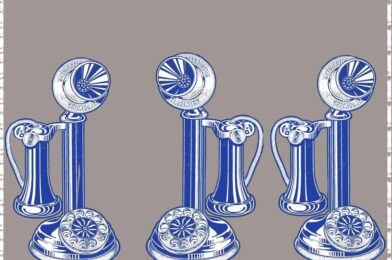
Image: adapted from a 1912 advertisement of the Illinois Telephone and Telegraph Co.

Music used in promotional material: ‘A Better Normal’ by Ian Sutherland

Tagged : / / / / / / / /

Witnessing

Ulrich Baer talks to Kim about the process and phenomenon of witnessing, which creates collective acknowledgement, understanding, and responsibility for trauma. Among other works, he talks about Shoshana Felman and Dori Laub’s book Testimony. In his discussion of witnessing with respect to our present political moment, he talks about the murder of George Floyd and the following global reckoning.

Ulrich Baer is University Professor at New York University where he teaches literature and photography, and writes frequently about photography, art, literature, and other subjects. A graduate of Harvard and Yale, he has been awarded Guggenheim, Getty, and Humboldt fellowship.

Image: Detail from ‘Girl with a Yellow Bird’ by Hale Woodruff.

Music used in promotional material: “Leaving for Chicago” by Rest You Sleeping Giant.

Tagged : / / / / / / / / /

Death Drive

Kim talks with Michelle Rada about the death drive in psychoanalysis.

Michelle references Todd McGowan’s Enjoying What We Don’t Have: The Political Project of Psychoanalysis, University of Nebraska Press, 2013.
She also recommends Capitalism and Desire: The Psychic Cost of Free Markets, by Todd McGowan.
In our longer conversation, she also quoted, What IS Sex? by Alenka Zupančič, MIT Press, 2017.
She also recommends a special issue of differences: A Journal of Feminist Cultural Studies on “Constructing the Death Drive.”  This issue includes an article by Luce Cantin, “The Drive, the Untreatable Quest of Desire” which she discusses in the epidsode. Michelle thinks the whole issue is worth checking out, and especially recommends the article in there by Tracy McNulty as well, “Unbound: The Speculative Mythology of the Death Drive” and the piece by Willy Apollon, “Psychoanalysis and the Freudian Rupture.”
She also highly recommends Life and Death in Psychoanalysis by Jean Laplanche (Johns Hopkins UP, 1976), which really informs her understanding of the economics/psychic structure of the drive.
and of course….Beyond the Pleasure Principle by Sigmund Freud.
And “On Narcissism: An Introduction,” Freud’s 1914 essay on primary/secondary narcissism.

Michelle Rada is a PhD candidate in English at Brown University and Affiliated Faculty at Emerson College. Her research is on modernist aesthetics, form, the novel, and psychoanalysis. Michelle’s work has appeared in Room One-Thousand, The Comparatist, The James Joyce Quarterly, The Journal of Beckett Studies, and The Journal of Modern Literature. She is Senior Assistant Editor at differences: A Journal of Feminist Cultural Studies.

Tagged : / / / / / / / /

Hoarding

Kim talks to Rebecca Falkoff about hoarding.

Her book on hoarding, Possessed, will be coming out with Cornell University press in April of 2021.

In the episode, she references Giorgio Agamben’s Stanze: La parola e il fantasma nella cutltura occidentale, translated into English as Stanzas: Words and Phantasm in Western Culture. by Ronald L. Martinez (University of Minnesota Press, 1993). And Arjun Appadurai’s essay, “Mediants, Materiality, Normativity.” Public Culture 27 no. 2 (2015) doi: 10.1215/08992363-2841832

Rebecca is an assistant professor of Italian studies at NYU.

She also has a blog on hoarding that you might want to check out: https://ifiwereahoarder.com/

The image is the future cover of Possessed. Painting by Carey Lin, Untitled (Screen shot 2009-10-19 at 1.20.48), 2011, Oil on canvas, 15 x 22 in. from the series Hardly nothing to do without

Tagged : / / / / / / /
css.php